


In large-scale solar farms or commercial rooftop installations, a single component failure can disrupt the entire project schedule. While major components like panels and inverters get the spotlight, component choices regarding your balance of systems (BOS) can significantly impact installation speed, system safety, and long-term operational viability.
The 4-string solar combiner box serves as the critical junction point for these systems. Functioning as the “central nervous system” of the DC array, it aggregates power from four separate PV strings, organizes the output, and ensures safety. A high-quality combiner box protects your assets from environmental hazards and electrical faults, such as lightning strikes.
Selecting the right photovoltaic combiner box features is not a trivial detail; it is a strategic decision. This guide helps project managers and engineers navigate the complexities of selecting a 4-string solar combiner box. We will cover how to maximize cost-efficiency and ensure safety compliance, specifically looking at specifications like 1000V/1500V ratings and the option for custom configurations.

1. Defining the Role of a Photovoltaic Combiner Box
The “Traffic Controller” of Solar Energy
To make informed decisions, we must first define the engineering function of the device. What exactly does a photovoltaic combiner box do?
Visualize your solar panels as individual streams of energy. You cannot route multiple independent strings directly to an inverter efficiently; they must be consolidated. The 4-string solar combiner box acts as the aggregation point. It gathers the DC power from four distinct PV strings and combines them into a unified, high-current output line that feeds into the inverter. It acts effectively as a traffic controller, ensuring electricity flows smoothly and safely according to established design principles.
The First Line of Defense
Beyond aggregation, the combiner box is the system’s primary shield. It protects downstream equipment—most notably the expensive inverter—from electrical anomalies. In the event of a voltage spike or lightning strike, a robustly designed combiner box absorbs the impact. This level of safety is paramount. Manufacturers like LETOP understand this necessity, engineering boxes that prioritize reliability to protect your investment.
Furthermore, a well-designed combiner box enhances operational efficiency. It simplifies wire management, reducing installation errors. Crucially, features like a combiner box with DC disconnect allow technicians to isolate specific arrays for maintenance without shutting down the entire plant. This capability minimizes downtime and facilitates easier troubleshooting.
2. Robust Overcurrent Protection
Protecting Your Investment from Fault Currents
What happens when current levels exceed safe limits? Without proper protection, “runaway” electricity can permanently damage panels, inverters, and cabling. Overcurrent protection devices (OCPD) are the safety valves of your system.
There are two primary methods for handling overcurrent in a 4-string combiner box: fuses and circuit breakers. Each has specific applications depending on your project’s maintenance capabilities and budget.

Fuses: The Precision Protectors
Fuses are sacrificial devices. When an overcurrent event occurs, the internal element melts, breaking the circuit instantly. They are cost-effective and reliable. However, for DC solar applications, you cannot use standard AC fuses. You must specify DC-rated fuses (gPV type). These are specifically engineered to handle the unique arc-quenching requirements of DC power at voltages like 1000V or 1500V. Proper sizing based on your panel’s short-circuit current (Isc) is critical for effective protection.
Circuit Breakers: The Resettable Solution
Circuit breakers perform the same protective function but offer the advantage of being reusable. If a fault trips the system, a technician can simply reset the switch rather than replacing a component. For remote sites where logistics are difficult, a high-quality DC circuit breaker can significantly reduce Operation and Maintenance (O&M) costs and downtime.
So, Fuses or Breakers?
If upfront cost is the primary driver, fuses are typically the standard choice. However, if minimizing long-term maintenance labor is the priority, circuit breakers are often the superior engineering choice. Balancing these factors is key to defining your specific combiner box requirements.
3. Integrated Surge Protection Devices (SPDs)
Why SPDs Are Necessary
While fuses and breakers handle steady overcurrent, your system also faces threats from sudden, high-voltage transients—most commonly from lightning strikes or grid switching events. These surges can destroy sensitive inverter electronics in milliseconds.
This is where the Surge Protection Device (SPD) becomes essential. Connected in parallel to the DC bus, the SPD acts as a rapid-response diverter. When a voltage spike occurs, it clamps the voltage and directs the excess energy to the ground, shielding the system.
Selecting the Right SPD for Solar
For photovoltaic applications, you should look for Type 2 DC Surge Protective Devices. These are designed to withstand the specific surge characteristics of outdoor solar installations. Key specifications to verify include:
- Ucpv (Maximum Continuous Operating Voltage): Must be higher than the PV array’s maximum open-circuit voltage.
- In (Nominal Discharge Current): Determines the magnitude of the surge the device can handle safely.
Compliance is non-negotiable. Ensure your SPD meets standards such as IEC 61643-31. Top-tier SPDs also feature visual status indicators (usually changing from green to red), allowing maintenance personnel to quickly identify if a module needs replacement.
4. Enclosure Material and Environmental Rating
Decoding IP Ratings
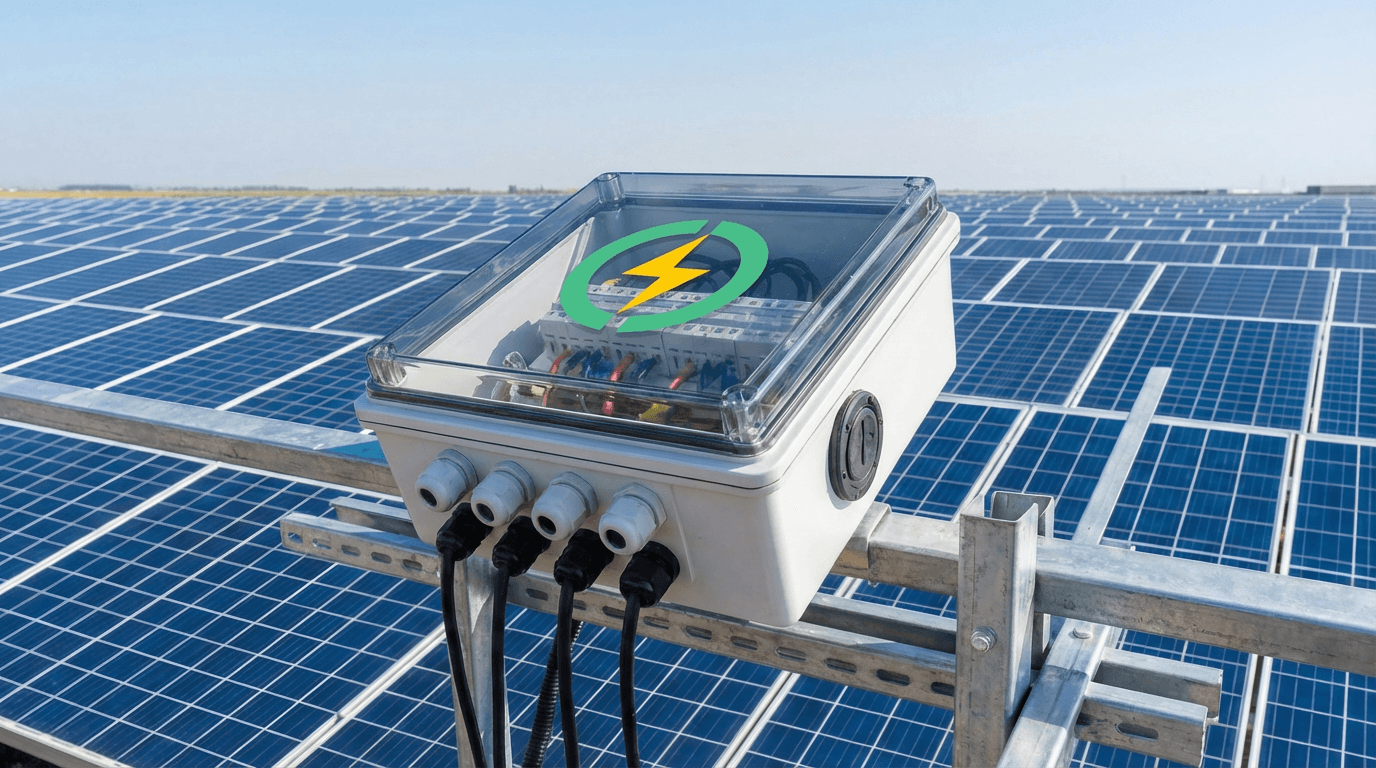
Your 4-string solar combiner box operates in harsh environments 24/7, exposed to rain, dust, UV radiation, and temperature extremes. The longevity of the internal components depends entirely on the quality of the enclosure.
Decoding IP Ratings
- First Digit (Solids): You need a ‘6’ (Dust-tight).
- Second Digit (Liquids): You typically need a ‘5’ (Water jets) or ‘6’ (Powerful water jets).
An IP66 rating is the benchmark for high-quality combiner boxes, ensuring total protection against dust storms and heavy rain.
Choosing the Right Material
Material selection is equally important:
- UV-Stabilized Polycarbonate: Lightweight, non-conductive, and immune to rust. Ideal for coastal environments with high salt mist.
- Powder-Coated or Stainless Steel: Extremely robust against physical impact. Stainless steel is preferred for harsh industrial zones but comes at a higher weight and cost.
Look for details that signal quality: seamless foam gaskets for waterproofing, pressure-equalizing breather vents to prevent internal condensation, and stainless steel latches. These features prevent moisture ingress, which is the leading cause of component failure.
5. Integrated and Rated DC Disconnect Switch
The “Emergency Stop”
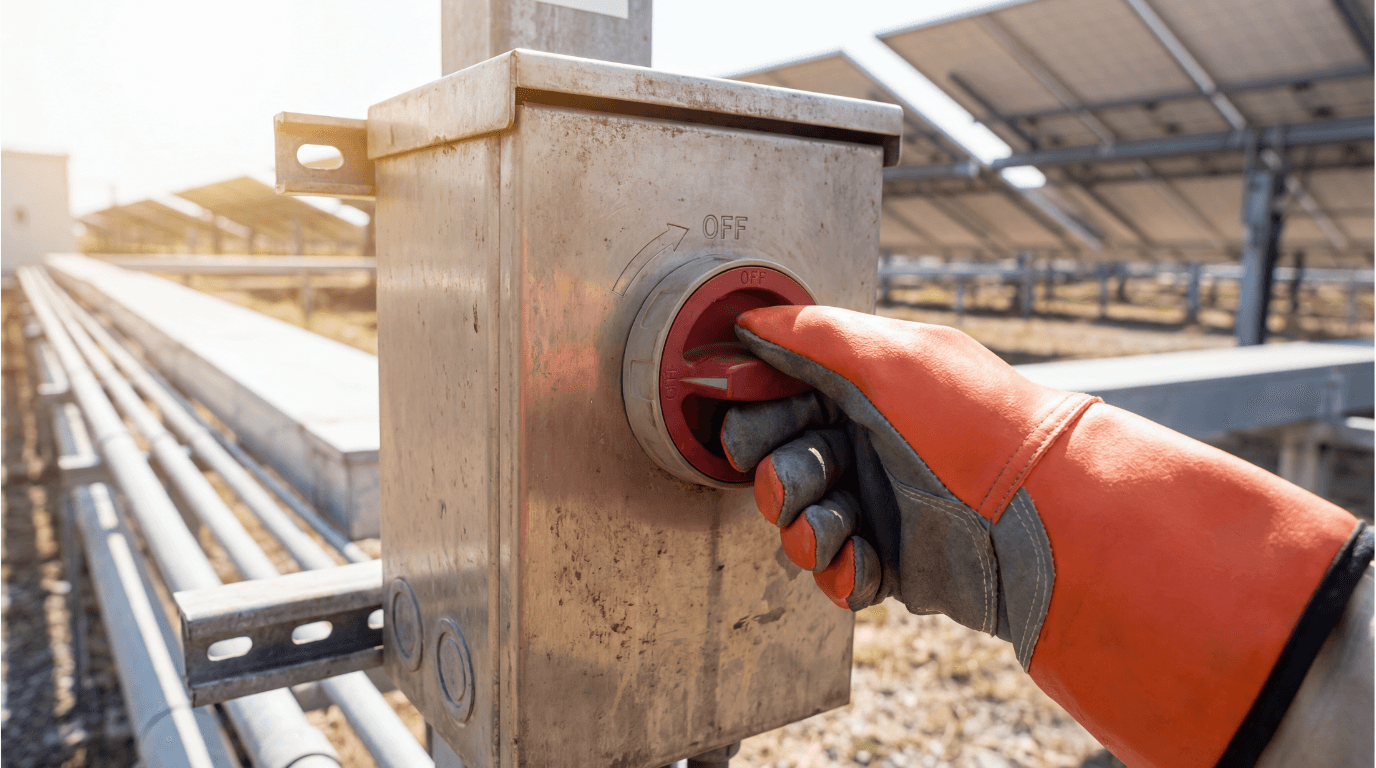
In the event of a fire or critical maintenance, technicians need a way to completely and safely isolate the PV array from the rest of the system. The DC Disconnect Switch serves this vital function.
Ensuring Compliance
Not just any switch will do. The disconnect must be load-break rated. This means it is engineered to safely interrupt the circuit even while full current is flowing, suppressing the dangerous electrical arcs that occur when breaking DC power.
Compliance with local codes (such as NEC 690.15 in the US) is mandatory. The switch provides a visible break in the circuit, ensuring that firefighters or maintenance crews can verify the system is de-energized before working.
6. Why Customization and Pre-Wiring is a Game-Changer
Beyond Off-the-Shelf
Standard off-the-shelf products do not fit every project. Unique inverter configurations, specific monitoring requirements, or unusual string layouts often require a tailored solution. This is where OEM/ODM (Original Equipment Manufacturer/Design) services add value.
By working with a manufacturer that offers customization, you can specify the exact mix of components—whether you need a specific brand of breaker, a particular input connector type, or advanced string-level monitoring.
The Value of Pre-Wiring
Perhaps the biggest advantage is pre-wiring and factory testing. Connecting dozens of components in a dusty field is prone to human error. A pre-wired combiner box arrives at the site fully assembled and tested in a controlled factory environment. This dramatically reduces on-site labor costs, minimizes wiring errors, and accelerates project commissioning. Working with ISO-certified manufacturers like LETOP ensures that these custom assemblies come with the necessary certifications, satisfying investors and inspectors alike.
7. Your Combiner Box Procurement Checklist
We have covered the critical aspects: precise overcurrent protection via DC fuses or breakers, Type 2 surge protection, robust IP66 enclosures, and load-break disconnect switches.
Selecting the right 4-string solar combiner box is a strategic investment in the safety and longevity of your solar asset. A high-quality box reduces O&M costs, prevents catastrophic failures, and ensures the system operates at peak efficiency.
Procurement Checklist:
- [ ] Voltage Rating: Is it rated for 1000V or 1500V DC as required?
- [ ] Protection: Does it use DC-rated fuses or DC circuit breakers?
- [ ] Surge Safety: Is a Type 2 DC Surge Protective Device integrated?
- [ ] Durability: Is the enclosure IP65/IP66 rated and UV stabilized?
- [ ] Isolation: Does it feature a load-break rated DC disconnect switch?
- [ ] Certification: Does the manufacturer provide third-party compliance certificates